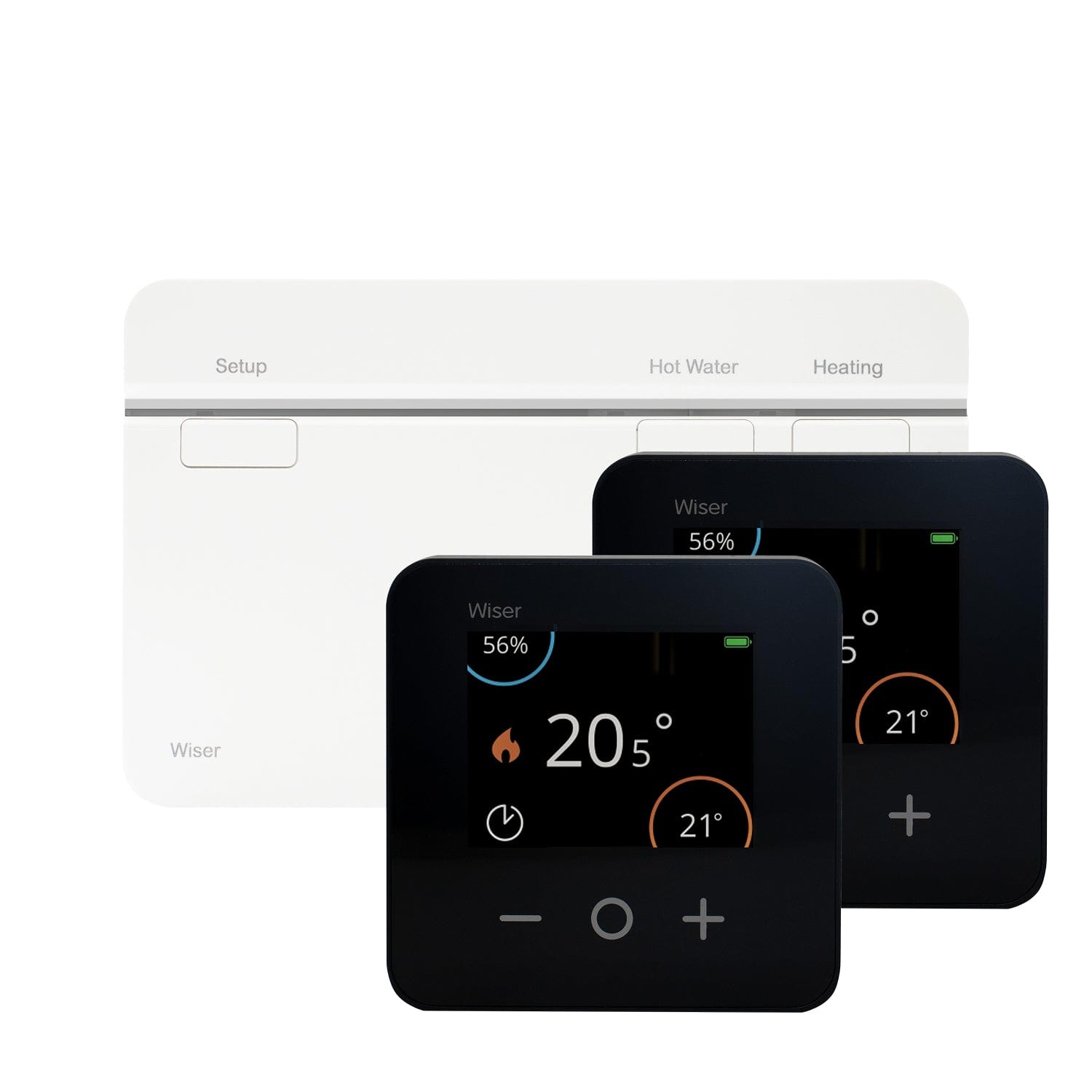

 Select Your Kit





The best smart thermostat for multiple zones is one that gives you independent control of different rooms, flexible scheduling, app-based control and the ability to expand as your home changes. Whether you have a two-storey property or a larger home with varying heating needs, choosing the right multi-zone smart thermostat can improve comfort while reducing energy use.
With energy costs continuing to rise, investing in multi-zone heating controls is no longer just about comfort; it’s about maximising efficiency and savings. By upgrading to a smart thermostat for multiple zones, annual heating bill savings of up to 30%* may be possible.
Why Choose a Multi-Zone Smart Thermostat?
A multi-zone smart thermostat allows you to control the temperature in different areas (or ‘zones’) independently. Instead of heating your entire home to the same temperature, you can customise settings for bedrooms and living spaces, including rarely used rooms, to prevent wasted energy.
This type of smart thermostat zoning is particularly useful in:
- Larger homes with multiple floors
- Open-plan living spaces
- Houses with varied insulation levels
For example, a two-zone thermostat system might separate upstairs and downstairs heating, improving both comfort and energy efficiency.
What Works: Key Features to Look For
When choosing the best smart heating system, focus on these essential features:
1. Flexible Zoning Control
Look for systems that allow easy expansion beyond just two zones. True multi-zone heating controls should adapt to your home layout, with easy-to-pair devices and options for mixed heating types.
2. Smart Scheduling & Automation
Advanced thermostats have modes that learn about your home and habits and adjust automatically - ideal for busy households.
3. App-Based Control
A user-friendly mobile app is crucial for managing zones remotely, making it easy to tweak temperatures and timing, as well as activate energy-saving modes from anywhere at any time.
4. Compatibility
Ensure your thermostat works with your current boiler and smart home setup (e.g., Alexa or Google Home) – look for a brand that helps you check smart thermostat compatibility before your purchase.
What to Avoid
Not all systems deliver the same performance. Here’s what to watch out for:
Limited Zoning Capabilities
Some thermostats claim ‘multi-zone’ features but only support a basic two-zone thermostat system without room-level control.
Complex Installation
Avoid systems that require extensive rewiring or minor adjustments that require a professional unless that fits your budget and timeline.
Poor User Experience
Clunky apps or complicated controls defeat the purpose of upgrading to smart technology.
Limited Future Expansion
A system that can’t grow with your needs may become outdated quickly, especially in larger homes – always opt for expandable options that don’t require a full rework as your needs change.
Is a Multi-Zone Smart Thermostat Worth It?
For many households, a multi-zone smart thermostat is a worthwhile investment. By allowing you to heat only the rooms you're using, it can help reduce unnecessary energy consumption while improving comfort throughout your home. It's particularly beneficial for larger properties, homes with multiple floors, or households where heating needs vary from room to room. With greater control over your heating system, you can create a more efficient home without compromising on comfort.
Final Thoughts
The best smart thermostat for multiple zones balances flexibility, ease of use, and reliable control. Whether you’re upgrading a smaller two-zone thermostat system or installing full smart thermostat zoning across a larger property, the goal is the same: smarter energy use and consistent comfort.
Choosing the right system ensures your home stays warm where it matters, without wasting energy where it doesn’t.
Find the right Wiser smart heating solution for your home with our quick and easy Product Selector
*Smart thermostat system percentage savings based on BEAMA and Salford University research statistics 2021. Savings are a guideline and will vary based on your home's thermal performance.